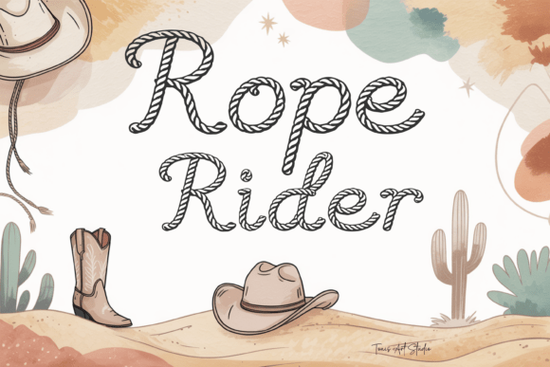
If you need lettering that feels like a lasso twisting through a rodeo arena, Rope Rider is the font you’ll want to reach for. Rope Rider Font is a handcrafted cowboy rope typeface inspired by classic western lassos, ranch life, and authentic rodeo sign painting. Every character is built with twisted rope strokes and smooth, natural curves, giving your text the rugged charm of the Wild West without turning it into a messy or overly grunge look. The letterforms stay clean and readable, which means you can use them for big bold titles or smaller craft messages and still keep that handmade rope character intact.
What kinds of western or rustic projects can you create with this font?
The obvious uses are ranch signage, cowboy event posters, and western-themed t-shirt graphics. But because Rope Rider holds its shape so well, you’ll also see it used for heat transfer vinyl on denim jackets, etched glassware, leather stamping patterns, and sublimation mugs. Crafters especially like it for Cricut and Silhouette projects because the rope strokes are balanced thick enough to weed easily, yet detailed enough to look like real twisted fiber. Small business owners designing hat patches, product labels, or farm stand logo marks find that this font delivers the exact rustic personality they need without feeling like a costume piece. Even for kids’ craft kits, birthday banners, or DIY wood signs, the rope style feels playful and generous, never overly sharp or intimidating.
How does the rope effect actually hold up at different sizes?
The rope texture is drawn with consistent stroke weight and clear open spaces between the twists. At small sizes, the font still reads as a bold serif-ish letter with subtle texture; at large sizes, you see every loop and coil clearly. This makes it suitable for both 12-inch wall decals and small price tags. If you’re working with vinyl, cut tests show that even intricate parts of the rope knots stay connected, so you won’t end up with floating bits of twine on your transfer tape. For print projects, the font looks crisp on matte cardstock and textured kraft paper, where the tactile illusion of rope really shines.
Is Rope Rider Font cut-safe for Cricut and Silhouette machines?
Yes, the design is optimized for cutting workflows. The rope strands are merged into unified letter bodies with no isolated floating elements that could tear during weeding. When you bring the text into Cricut Design Space or Silhouette Studio, you won’t need to do heavy node editing or add extra offsets just to make it cuttable. The letters come with natural weld points between the rope sections, so even a cursive lasso look stays machine-friendly. If you plan to use this for laser engraving, the clean line work translates well to wood and acrylic, giving you a burned rope texture that holds detail evenly.
What software and devices can you use this font with?
You can install Rope Rider just like any standard OTF or TTF file, so it works across Cricut Design Space, Silhouette Studio, Canva, Procreate, Adobe Illustrator, Photoshop, Affinity Designer, and even basic word processors. In Canva, the rope details remain sharp when you stretch text for large prints, and in Procreate, the textured outline inspires hand-drawn style lettering comps. Sublimation designers like that the font stays legible after pressing onto polyester fabrics and ceramics, because the twisted strokes don’t blur into blobs during heat transfer. For print-on-demand sellers, this opens up a lot of options: mugs, tote bags, hoodies, and wall art can all carry that same western rope character without quality loss.
How does this font compare to other decorative western or display fonts?
Many western fonts lean heavily into wood type serifs or overly distressed edges, which can look tired after a while. Rope Rider takes a different path: the rope concept is the main attraction, not just an add-on texture. The twisting fiber shapes feel more organic than a typical slab serif, and they pair well with clean sans-serif secondary text. If you’re exploring decorative serif styles, you might also want to look at delicate monogram fonts that use elegant wings and flourishes for a softer touch. For a completely different vibe, quirky pixel-based display fonts like Pokenom bring a playful gaming energy that contrasts sharply with the handcrafted rope look. And if you want to stay in the western family but need a smoother rope style, this particular rope-inspired option gives you the same lasso feel with a slightly more polished curve for larger signage. Having a few contrasting fonts helps you design merchandise sets that feel cohesive but not repetitive.
Can you use Rope Rider for branding and commercial work?
Yes, the license typically covers personal and commercial use, though you should always check the exact terms on the product page. For small businesses and print-on-demand sellers, this means you can create and sell physical products, digital designs, or logos that feature the font without worrying about extra fees. The western theme is broad enough to suit barbecue joints, country apparel lines, equestrian centers, outdoor adventure brands, and even modern farmhouse decor shops. When you imprint this rope lettering on leather coasters, chalkboard menus, or rustic wedding invitations, it immediately adds a sense of handcrafted care.
What file formats and glyph support can you expect?
Rope Rider typically comes as both OTF and TTF, including uppercase, lowercase, numbers, and common punctuation. Some versions also include ligatures or alternate characters that give you slightly different rope knot placements, which is handy for making two identical words look distinct in a design. If you need multilingual support for Spanish rancho themes or French country-style projects, check the character map, but most decorative western fonts cover Western European diacritics at minimum. The package is lightweight and installs quickly, so you can jump straight into designing without wrestling with complex software setups.
Are there any tips for pairing this font or making the most of it?
A few quick ideas from crafters who use this style often:
- Lift the rope texture with shading. Add a subtle drop shadow or offset layer in brown or gold to emphasize the twisted strands.
- Combine with a simple sans-serif. Pair Rope Rider with a clean font like Montserrat or Helvetica for product descriptions and small labels. This keeps the western vibe from overwhelming your message.
- Test colors that mimic natural rope. Use warm tan, cream, sandy brown, or even weathered white for a realistic lasso effect on dark backgrounds.
- Layer over wood or leather textures. The font’s rope detail shines when placed on organic surfaces, so choose backgrounds that feel physical and handmade.
- Weld the text before cutting. If your design program doesn’t automatically join the letters for cutting, a quick weld command ensures the rope sections act as one connected shape during vinyl weeding.
When you’re ready to give your crafts that authentic ranch-hand feel, Rope Rider delivers a lasso-twisted character that’s both bold and surprisingly easy to work with. Next step: download the font, type out a short western phrase like “Wild & Free,” and run a small cut test on scrap vinyl to see how the rope texture behaves on your machine.
Explore Design Butterfly Monogram Font: Design Beautiful Personalized Gifts
 Pokenom Font: Playful Lettering for Fun Designs
 Creative Designs & Fun Projects with Crayons Font
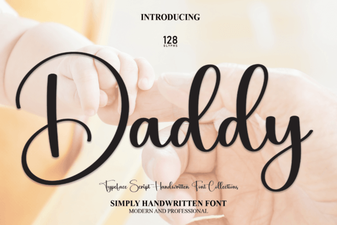 Daddy Font: Expressive Type for Bold Creative Projects
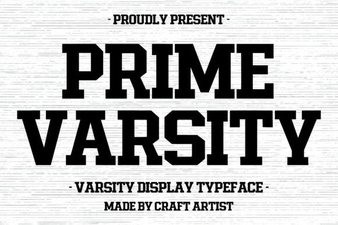 Prime Varsity Font: Elevate Your Sports Branding
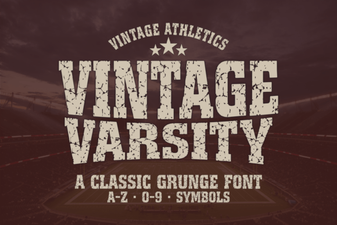 Vintage Varsity Font Ideas for Retro Designs